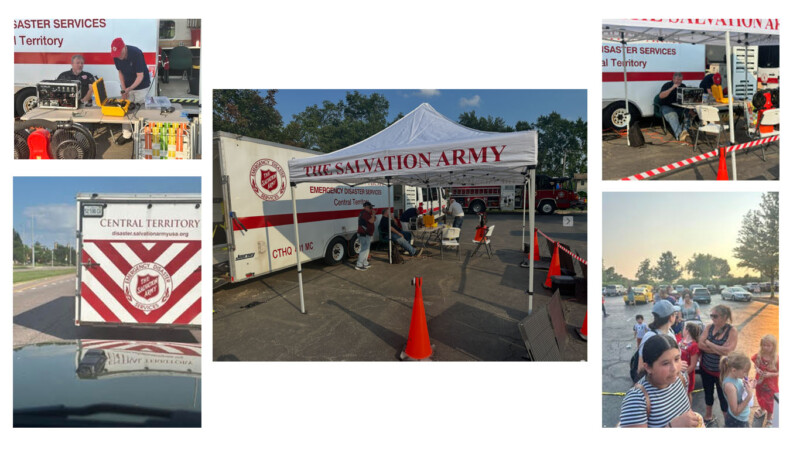
Schaumburg Amateur Radio Club and SATERN volunteers brought amateur radio, portable communications equipment, and plenty of fresh popcorn to the 2026 Hoffman Estates National Night Out.
National Night Out brings residents, police officers, first responders, and community organizations together for an evening focused on safety and neighborhood connections. The national program promotes police-community partnerships and neighborhood camaraderie.[2]
Although the evening was hot and humid, the volunteers stayed busy operating amateur radio, demonstrating portable equipment, and welcoming visitors.
Event Snapshot
Hoffman Estates National Night Out 2026
Item
Details
Event
Hoffman Estates National Night Out 2026
Date
Tuesday, August 4, 2026
Time
6:00–9:00 p.m.
Location
Fabbrini Park, 1704 Glen Lake Road, Hoffman Estates, Illinois
Participating Groups
Schaumburg Amateur Radio Club and the Salvation Army Team Emergency Radio Network
Activities
Portable amateur radio, communications equipment demonstrations, the SARC Tech Net, public outreach, and popcorn
Popcorn Served
Approximately 300 large cups during the three-hour event
Event Information
Provided by John Thornton, KD9VZJ, Northern Illinois SATERN Coordinator
A Portable Communications Setup
The SATERN Central Territory Communications Trailer arrived behind the Central Territory Sprinter van driven by Don, KD9NJR. John, KD9VZJ, followed in his Jeep 4xe.
SATERN stands for the Salvation Army Team Emergency Radio Network. Its licensed amateur radio volunteers help support emergency and auxiliary communications for The Salvation Army.[3]Learn more about SATERN.
At Fabbrini Park, the team deployed the communications trailer, portable radio equipment, solar panels, EcoFlow power stations, and portable fans. A 10-by-20-foot canopy provided welcome shade for volunteers and visitors.
The setup gave the public a practical look at how amateur radio equipment and portable power can be deployed away from a permanent station.
How the Portable Operation Worked
flowchart TD
A["Transport the trailer and equipment"] --> B["Deploy the canopy, radios, and portable power"]
B --> C["Connect the go-box and communications equipment"]
C --> D["Conduct the SARC Tech Net and demonstrations"]
D --> E["Welcome visitors and serve popcorn"]
E --> F["Shut down, pack equipment, and clean the site"]
A simple overview of the National Night Out portable communications operation.
SARC Tech Net Goes Live From the Park
Don, KD9NJR, conducted the SARC Tech Net live from the National Night Out site. Ken, W9KMP, assisted with the equipment and worked alongside Don at the communications go-box.
A go-box places radios, power connections, and related equipment into a portable package that can be transported and placed into service quickly.
Holding the net from the park demonstrated that club activities do not have to remain inside a home station or meeting room. With suitable radios, antennas, and power sources, amateur radio can operate from many different locations.
The SARC Tuesday Night Tech Net begins at 7:30 p.m. and is open to amateur radio operators who want to ask questions, share information, or discuss technical topics.[4]
Serving the Community—One Cup at a Time
The amateur radio equipment attracted attention, but so did the aroma of hot, fresh popcorn.
John, KD9VZJ; Ken, W9KMP; and Don, KD9NJR, helped serve an estimated 300 large cups of popcorn during the three-hour event. At times, the line of visitors seemed endless.
The popcorn gave volunteers another opportunity to greet local families, answer questions, and introduce people to amateur radio and community service.
A special thank-you goes to Keith, KD9WDU, who helped with station shutdown and cleanup even though he was not included in the photographs.
Thank you to everyone who transported equipment, operated the station, served popcorn, answered questions, and helped return the site to order at the end of a long evening.
How to Participate in a Future Event
Community events are a good way to see amateur radio in action. They also give operators an opportunity to practice portable station setup, net operations, teamwork, and public outreach.
Members who would like to help at a future event can:
Watch the SARC calendar for upcoming club and public-service activities.
Volunteer for station setup, operation, public outreach, or cleanup.
Ask the event coordinator before bringing personal radios, antennas, batteries, or other equipment.
Wear suitable clothing and bring water when an event will be held outdoors.
Learn the operating plan, assigned frequencies, and net procedures before going on the air.
Help explain amateur radio in simple terms to visitors who may be seeing it for the first time.
Suggested SARC Goals
Ways to build experience through community events
Member Type
Suggested Goal
Practical First Step
Curious Visitor
Learn what amateur radio can do away from a home station.
Visit a public event and ask a volunteer to explain the portable station.
Newly Licensed Operator
Become more comfortable with nets and portable equipment.
Listen to the Tech Net, practice checking in, and assist an experienced operator.
Portable Operator
Improve station setup and shutdown procedures.
Create a checklist for radios, antennas, feed lines, power, tools, and weather protection.
Public-Service Volunteer
Develop stronger communication and teamwork skills.
Help with a supervised deployment and learn the event communication plan.
Experienced Member
Help newer operators gain practical experience.
Mentor a volunteer and explain each part of the station during setup.
Give It a Try
Whether you are an experienced operator, recently licensed, or simply curious about amateur radio, SARC welcomes you.[5]
You do not need to know everything before participating. Community events offer a friendly place to observe, ask questions, help with practical tasks, and learn how a portable station comes together.
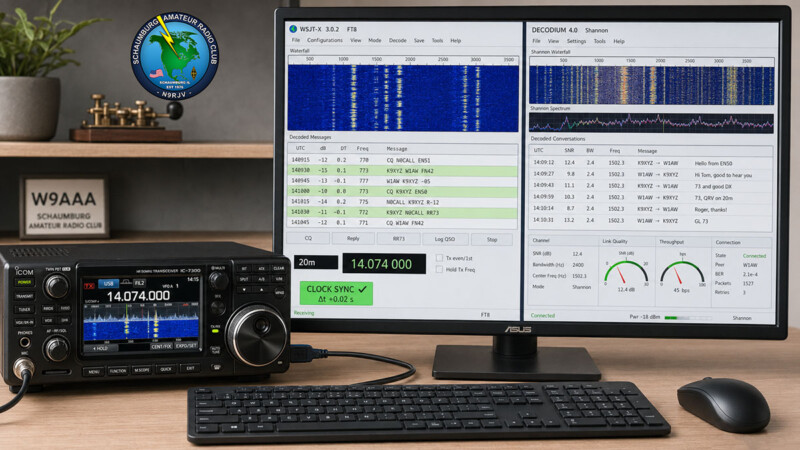
Here is a useful digital-mode experiment for SARC members. WSJT-X 3.0.2 and DECODIUM 4.0 “Shannon” can both place weak-signal activity on your screen, but they approach the operating experience differently.
WSJT-X remains the official reference program for FT8 and many related weak-signal modes. DECODIUM builds on that software lineage while adding FT2, a redesigned interface, integrated station tools, and a rapidly developing C++ architecture.
This is not a declaration that one program is always better. It is a practical comparison intended to help operators choose the right software for their interests and test both programs fairly.
Topic Snapshot
Comparison overview
Item
Details
Subject
A comparison of WSJT-X 3.0.2 and DECODIUM 4.0 “Shannon”
Post idea from
Paul Meyers — KE9EJX
Primary modes
FT8, FT4, FT2, Q65, WSPR, and other weak-signal digital modes
WSJT-X version reviewed
WSJT-X 3.0.2, the current General Availability release when this article was prepared[1]
DECODIUM release reviewed
DECODIUM 4.0 package version 1.0.508; this project changes frequently, so check the official release page before downloading[6]
Audience
SARC members, visitors, new hams, digital operators, and technical experimenters
Main question
Which program best matches the way you want to operate?
Call to action
Choose a digital mode, begin with receive-only testing, and then make a contact
What Is WSJT-X 3.0.2?
WSJT-X is the official weak-signal communication program created and maintained by Joe Taylor, K1JT, and the WSJT Development Team. It supports eleven documented modes: FT8, FT4, Q65, JT65, JT9, JT4, FST4, FST4W, MSK144, WSPR, and Echo.[2]
Version 3.0 added parallel FT8 decoding, message filters, audible alerts, band hopping, improved high-resolution display support, and additional Earth-Moon-Earth operating features. Version 3.0.2 is primarily a bug-fix release. It includes corrections for Ham Radio Deluxe, OmniRig, Transceiver Control Interface, audio handling, installation, and several operating tools.[3]
WSJT-X also works with the QMAP and MAP65 companion programs. These tools are especially useful for wideband Q65 and JT65 reception, moonbounce, and other advanced VHF, UHF, and microwave work.
What Is DECODIUM 4.0 “Shannon”?
DECODIUM 4.0 Core Shannon is an independent weak-signal digital-mode application based on the WSJT-X and DECODIUM development lineage. Its name honors Claude Shannon and the role of information theory in reliable communication through noise.[4]
The program combines a Qt/QML interface with decoding and transmitting components that are being progressively migrated to C++. Its documentation lists FT8, FT4, FT2, Q65, MSK144, JT65, JT9, JT4, FST4, FST4W, and WSPR support. The availability of individual features can vary by operating system, decoder backend, and build.[4]
DECODIUM places many station tools inside one program. These include a live map, DX Cluster, PSK Reporter tools, an ADIF log, persistent decode history, internal Network Time Protocol synchronization, customizable panels, and a local-network web dashboard.[5]
The project is developing quickly. Its documentation notes that some native decoder, modulator, and cross-platform components remain under migration or consolidation. Operators should record the exact build number when reporting a problem or comparing results.
Side-by-Side Comparison
Major differences between WSJT-X 3.0.2 and DECODIUM 4.0
Area
WSJT-X 3.0.2
DECODIUM 4.0 “Shannon”
Project role
Official WSJT Development Team distribution and reference implementation
Independent project built from the WSJT-X and DECODIUM lineage
Release approach
General Availability release with point releases that usually concentrate on corrections
Fast-moving project with frequent feature, architecture, packaging, and interface updates
FT8 and FT4
Core, well-documented operating modes
Supported with a redesigned interface and integrated operating tools
FT2
Not included in the eleven modes listed by the official WSJT-X documentation
A central project feature with 3.75-second transmit-and-receive slots and asynchronous decoding
Q65 and EME
Strong emphasis on Q65, Echo, QMAP, MAP65, and Earth-Moon-Earth operation
Q65 is listed, although the project documentation emphasizes FT2, FT8, and integrated station operation
FT8 decoding
Version 3.0 provides optional parallel processing with concurrent threads
Uses the project’s Raptor decoding work and progressively migrated C++ paths
Main interface
Familiar two-pane operating window with a separate Wide Graph waterfall
Customizable Qt/QML workspace with dockable and detachable panels
Maps and cluster tools
Can exchange information with companion and third-party programs
Provides integrated Live Map, DX Cluster, and PSK Reporter panels
Decode history
Maintains operating and decode information in standard program files
Provides searchable, persistent SQLite decode history with ADIF export
Time synchronization
Requires the station computer to maintain an accurate system clock
Adds an internal NTP client and a panel for monitoring time offset and received DT values
Radio control
Supports established CAT control methods, including Hamlib, FLRig, HRD, OmniRig, and TCI-related workflows
Documents Hamlib, native radio backends, HRD, OmniRig, TCI, and local serial control
External integration
Provides UDP networking, logging, reporting, and cooperating-program support
Documents WSJT-X-compatible UDP, ADIF TCP, N1MM, PSK Reporter, QRZ Logbook, Cloudlog, and other connections
Remote operation
Normally handled through station-control or third-party software
Includes an optional local-network web dashboard for a computer, tablet, or phone
Best starting point
Operators who want the official release, established documentation, or advanced EME tools
Experimenters interested in FT2 or an integrated, customizable digital-station workspace
The Important FT2 Difference
FT2, or Fast Track 2, is a digital mode created within the DECODIUM project. According to its documentation, FT2 uses 3.75-second transmit-and-receive slots. Each transmission lasts approximately 2.52 seconds.[5]
That short cycle can make contacts move much faster than FT8. It also leaves less time for the computer to receive, decode, select a response, and prepare the next transmission.
Clock accuracy, audio configuration, and processor performance therefore become especially important. The DECODIUM manual recommends beginning with FT8, confirming that the station decodes properly, and moving to FT2 only after the basic configuration is working.
FT2 activity may be less common than FT8 activity. Check current project documentation, working-frequency information, applicable FCC rules, and the appropriate amateur band plan before transmitting. Do not assume that an FT8 calling frequency is automatically the correct place for an FT2 experiment.[7][8]
Can One Program Decode More Signals?
That question cannot be answered fairly with one crowded-band screenshot.
The programs offer different decoder settings, filters, hints, timing controls, and display rules. A larger number on the screen does not necessarily mean more valid signals were recovered. Duplicate messages, hinted decodes, filtered messages, and false decodes can change the total.
WSJT-X 3.0 introduced parallel FT8 processing and other performance improvements. DECODIUM uses its Raptor decoding work, C++ components, OpenMP where available, and asynchronous processing for FT2. Those design differences are worth testing, but they do not establish a universal winner for every computer, band condition, and configuration.
A useful comparison should measure valid, unique messages recovered from the same recorded audio.
How to Run a Fair Comparison
1. Record the Test Conditions
Write down the computer, operating system, radio, audio interface, software version, mode, decode depth, and any special decoder options. A comparison without these details is difficult to repeat.
2. Back Up the Station
Back up the existing ADIF log and program settings before installing or changing software. Use the official download source for each program.
3. Begin in Receive-Only Mode
Disable transmitting while confirming the audio input, waterfall, frequency, mode, and clock. This prevents an unexpected transmission while CAT and audio controls are being tested.
4. Do Not Give Both Programs Control at Once
Close one program before allowing the other to control the radio, serial port, audio output, or push-to-talk function. Two programs trying to command the same radio can cause frequency, mode, or transmit-control conflicts.
5. Use the Same Audio
Record several reception periods and decode the same WAV files in both programs. Keep the passband, mode, and comparable decode options as close as possible.
6. Count Valid Unique Messages
Separate unique valid messages from duplicates and questionable decodes. Look for complete callsigns, plausible grids, consistent signal reports, and messages confirmed in later cycles.
7. Compare the Entire Operating Experience
Decoder count is only one measurement. Also compare decode delay, processor load, CAT reliability, logging, screen readability, and how easily you can complete a contact.
Suggested comparison worksheet
Measurement
What to Record
Why It Matters
Valid unique decodes
Confirmed messages recovered from the same audio
Provides a more useful result than the total number of displayed lines
Questionable decodes
Incomplete, implausible, or unconfirmed callsigns and messages
Helps identify false or overly aggressive decoding
Decode latency
Time from the end of a received signal to its appearance
Especially important with short operating cycles
Processor load
Typical and peak CPU use during busy periods
Shows whether the computer can keep pace without stalling
Interface responsiveness
Waterfall, clicking, scrolling, and panel response
A slow interface can interfere with actual operation
CAT and PTT reliability
Frequency changes, mode changes, split behavior, and transmit control
Reliable station control is essential before transmitting
Logging and reporting
ADIF entries, PSK Reporter spots, and external logger transfers
Prevents lost or incomplete contact records
Operator preference
Readability, workflow, and ease of correcting a mistake
The best station software must also work well for its operator
Which Program Should You Try First?
---
config:
  markdownAutoWrap: true
  flowchart:
    wrappingWidth: 220
    useMaxWidth: true
    nodeSpacing: 40
    rankSpacing: 50
---
flowchart TD
    A["`Choose your main
digital-mode goal`"]

    B{"`What interests
you most?`"}

    C["`Begin with
WSJT-X 3.0.2`"]

    D["`Evaluate
DECODIUM 4.0`"]

    E["`Run a controlled
receive test`"]

    A --> B

    B -->|"Official FT modes,<br/>Q65, or EME"| C
    B -->|"FT2 or an<br/>integrated dashboard"| D

    C --> E
    D --> E
A simple starting path for comparing the two programs.
A new digital operator will usually find WSJT-X the clearest reference point because its documentation, operating conventions, and support community are well established.
An operator who already understands FT8 may enjoy evaluating DECODIUM’s integrated tools and flexible workspace. DECODIUM is also the necessary choice for someone who specifically wants to explore FT2.
For advanced Q65, moonbounce, or wideband VHF and UHF work, the official WSJT-X, QMAP, and MAP65 combination deserves careful consideration.
There is no requirement to make a permanent choice. You can keep both programs available, provided that only one controls the radio and audio output at a time.
Suggested SARC Goals
Practical goals for different club members
Member Type
Suggested Goal
First Step
New digital operator
Decode FT8 and complete one properly logged contact
Begin with the official WSJT-X tutorial or DECODIUM’s FT8 quick-start procedure
Returning operator
Review the newer filtering, alert, and sequencing tools
Install the current release and verify saved radio and audio settings
Technical experimenter
Compare both FT8 decoders with the same WAV recordings
Create a written test sheet before examining the results
FT2 experimenter
Receive and study FT2 before transmitting
Verify clock accuracy, CPU performance, software version, and current operating information
DX or contest operator
Evaluate filters, alerts, queues, and multi-station workflows
Test with saved audio before relying on a feature during a busy event
VHF or EME operator
Explore Q65, Echo, QMAP, and MAP65
Read the official WSJT-X guide for the intended propagation path
SARC presenter
Prepare a repeatable live comparison for a club meeting
Bring the same recordings, settings, and measurement worksheet for both programs
Give Digital Modes a Try
WSJT-X 3.0.2 is a strong starting point for operators who want the official weak-signal platform and its established operating tools. DECODIUM 4.0 “Shannon” offers an interesting alternative for operators who want FT2, a customizable workspace, and more station functions in one application.
Start with reception. Confirm the clock, radio control, audio levels, and waterfall. Then make a careful, low-power contact with a clean transmit signal and little or no automatic level control activity.
Most importantly, keep notes and share what you learn. A repeatable comparison from a SARC station is more useful than a claim based on one busy band opening.
Choose a digital mode, listen first, and see what your station can decode.
Begin with receive-only testing, and share your results with SARC
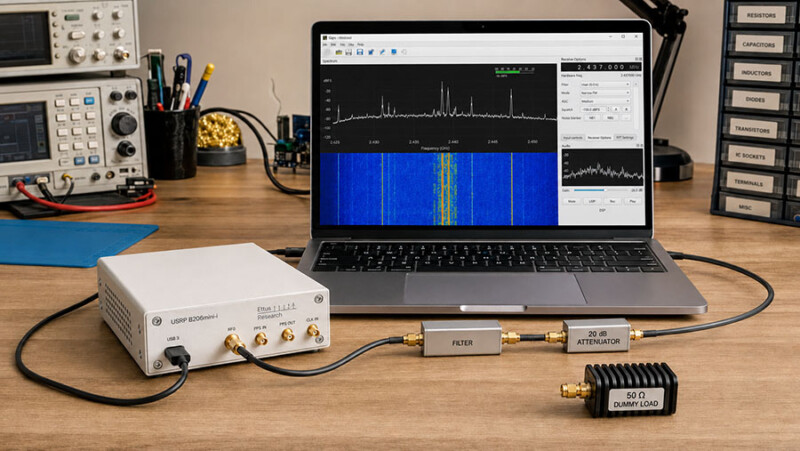
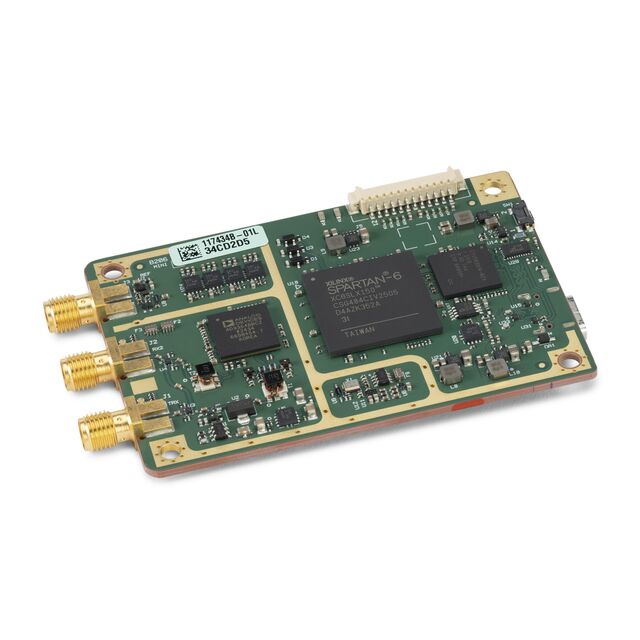
Here is a useful experimentation idea for SARC members: build a flexible software-defined radio bench around the Ettus USRP B206mini-i. Instead of buying a radio designed around one mode, this compact platform lets software define much of the receiver, transmitter, measurement, and signal-processing path.
DigiKey highlights the B206mini-i for wireless communication research, spectrum monitoring, education, and embedded development.[1] For SARC, the interesting question is not simply what the device can receive or transmit. It is what we could learn by building a repeatable experiment around it.
Post idea from Paul Meyers – KE9EJX.
Topic Snapshot
Ettus USRP B206mini-i project at a glance
Item
Details
Subject
Building a Flexible SDR Radio with the Ettus USRP B206mini-i: Compact Power for Wireless Innovation
Platform
Ettus USRP B206mini-i software-defined radio
Radio architecture
One transmit path and one receive path with full-duplex capability
Tuning range
70 MHz to 6 GHz
Instantaneous bandwidth
Up to 56 MHz
Software
USRP Hardware Driver (UHD) 4.9 or later, GNU Radio, C/C++, or Python
Best first project
A receive-only spectrum display or narrowband receiver
Audience
SARC members, visitors, new hams, the public, operators, and volunteers
SDR means software-defined radio. The radio still needs real analog hardware for antennas, filtering, gain, frequency conversion, and data conversion. However, many functions that would be fixed in a conventional radio can be changed in software.
A member can change the center frequency, sample rate, receiver gain, filter width, demodulator, decoder, display, recorder, or transmitted waveform without rebuilding the complete radio. That makes an SDR useful for learning because each block in the signal chain can be viewed, adjusted, and measured.
The B206mini-i is a 1×1 platform. In plain language, it has one transmit path and one receive path. Full duplex means those paths can operate at the same time when the software and external RF system are designed correctly. It does not mean that the unit has two independent receive channels.
What the B206mini-i Brings to the Bench
Selected manufacturer specifications for the B206mini-i[2]
Feature
Specification
Why It Matters
RF coverage
70 MHz to 6 GHz
Covers many VHF, UHF, and microwave experiments. It does not directly cover the HF or 6-meter amateur bands.
Instantaneous bandwidth
Up to 56 MHz
Lets software examine or generate a wide slice of spectrum at one time. It does not view the complete 70 MHz-to-6 GHz range at once.
RF channels
1 TX and 1 RX, independently tunable
Supports receive, transmit, and carefully designed full-duplex experiments.
Measured maximum TX output
16.06 dBm from 70 MHz to 4 GHz; 9.16 dBm from 4 GHz to 5.9 GHz
Provides a low-level RF source for controlled experiments. Output varies with frequency, and these values are not permission to transmit.
RF and digital hardware
Analog Devices AD9364 transceiver and Spartan-6 XC6SLX150 FPGA
Combines a flexible RF front end with programmable digital logic.
Data conversion
12-bit ADC and 12-bit DAC; maximum I/Q sample rate of 61.44 MSa/s
Provides complex digital samples for software processing. Actual usable rates depend on the complete host and application.
Host connection
Bus-powered USB 3 Type-C; 5 V DC at 0.9 A maximum
Moves samples and power through one compact host connection.
Timing reference
External 10 MHz clock or pulse-per-second (PPS) reference
Supports experiments that need improved frequency or time coordination.
Expansion
Eight 3.3 V GPIO lines and JTAG
Allows hardware control, triggering, FPGA programming, and debugging for advanced work.
Physical versions
Board-only or enclosed; enclosed unit is 84.9 mm × 55.7 mm × 19.8 mm and 108 g
The manufacturer specifies indoor, noncondensing use. Before operation, the board-only variant must be installed in a suitable shielded enclosure that also meets the stated fire and mechanical end-product enclosure requirements.
The 56 MHz figure is a maximum instantaneous bandwidth, not a requirement. A first project should use only the sample rate and bandwidth it needs. Smaller settings reduce host processing, storage, and USB demands.
How the Signal Path Works On receive, the AD9364 RF
How the Signal Path Works
On receive, the AD9364 RF front end tunes and converts a selected part of the spectrum into in-phase and quadrature samples, usually called I/Q data. Those two sample streams preserve amplitude and phase information. The FPGA manages timing and high-rate digital work. USB carries the samples to the host computer, where UHD connects the hardware to GNU Radio or a custom program.[3]
---
config:
  markdownAutoWrap: true
  flowchart:
    wrappingWidth: 220
    useMaxWidth: true
    nodeSpacing: 40
    rankSpacing: 50
---
flowchart TD
    A["`Antenna or protected
test source`"]

    B["`AD9364 RF
front end`"]

    C["`Spartan-6 FPGA
and I/Q samples`"]

    D["`USB 3 Type-C
connection`"]

    E["`UHD hardware
driver`"]

    F["`GNU Radio, Python,
or C/C++`"]

    G["`Display, decode,
record, or measure`"]

    A --> B
    B --> C
    C --> D
    D --> E
    E --> F
    F --> G
Basic receive path. A transmit experiment follows the path in reverse and requires additional RF protection, testing, and legal checks.
Most new users can begin in GNU Radio Companion, where blocks are connected into a visual flowgraph. FPGA modification is possible, but it is an advanced step. A good first build leaves the supplied FPGA image alone and concentrates on a stable receive path.
Experiment Ideas for SARC
Projects that can grow from simple observation to controlled transmission
Experiment
Starting Mode
What It Teaches
Waterfall tour
Receive only
Center frequency, sample rate, gain, noise floor, occupied bandwidth, and visible interference
VHF or UHF FM receiver
Receive only
Channel filtering, FM demodulation, squelch, audio recovery, and signal-to-noise ratio
Antenna or filter comparison
Receive only
How signal level, noise, overload, and selectivity change when one RF component is changed
Digital signal recorder and decoder
Receive only
I/Q recording, sampling, digital demodulation, clock recovery, and repeatable offline analysis
Frequency-reference comparison
Receive only
Use an external 10 MHz reference to study oscillator drift and frequency accuracy, or PPS to study timestamp and time alignment.
Attenuated loopback
Shielded bench test
Waveform generation, occupied bandwidth, filtering, attenuation, and receiver dynamic range
Low-power amateur digital experiment
Licensed and measured transmit setup
Modulation, identification, minimum necessary bandwidth, spurious-output control, and link testing
What You Need
An enclosed Ettus USRP B206mini-i, or a board-only variant installed in a suitable shielded enclosure that also meets the manufacturer’s fire and mechanical end-product enclosure requirements
The correct USB 3 Type-C data cable and a host computer with a suitable USB connection
A current supported UHD release; the manufacturer specifies UHD 4.9 or later
GNU Radio for visual flowgraphs, or C/C++ or Python for custom applications
A band-appropriate antenna, 50-ohm coax, and the correct SMA adapters for receive-only work
Filters, attenuators, or a preamplifier selected for the specific experiment
For transmit testing: a suitable 50-ohm dummy load, verified attenuation, output filtering, and a way to examine the transmitted spectrum
A notebook or shared project log for frequency, sample rate, bandwidth, gain, antenna, filter, software version, and results
Check the current NI, Ettus, and DigiKey pages before ordering. Availability, package contents, software support, and pricing may change.
A Practical First Setup
Choose one receive question. For example, decide to display a known local signal, compare two antennas, or measure how a filter changes the noise floor.
Connect the receive path. Use the RX2 connector, a suitable antenna or protected test source, and any needed receive filter or attenuation. Do not connect another transmitter directly to the input.
Install UHD and verify the hardware. Ettus documents uhd_find_devices for discovery and uhd_usrp_probe for reporting device properties.[4]
 uhd_find_devices
 uhd_usrp_probe
Build the smallest useful flowgraph. In GNU Radio Companion, begin with a UHD: USRP Source and a frequency or waterfall display. A hardware USRP Source supplies the timing, so a Throttle block is not needed in that path.[5]
Start modestly. Select a narrow sample rate, begin with low receive gain, tune a known signal, and increase gain only as needed. Watch for overload and dropped-sample warnings.
Change one setting at a time. Record the center frequency, sample rate, analog bandwidth, gain, antenna, and observed result before making the next change.
Save the working baseline. Keep the flowgraph and notes together so another SARC member can reproduce the demonstration.
Protect the Radio and the Test Bench
The B206mini-i is sensitive laboratory hardware. Ettus says to terminate the transmit port in a suitable antenna or 50-ohm load, never apply more than −15 dBm to an RF input, and use at least 30 dB of attenuation for loopback operation.[6] Never connect the transmit port directly to RX2.
Use shielded I/O cables no longer than 3 m (10 ft), protect the hardware from electrostatic discharge, and keep it away from water and condensation. Power it only from a suitably rated and certified USB source with a Class 2, Limited Energy, or LPC output. Before operation, the board-only variant must be installed in a suitable shielded enclosure that also meets the stated fire and mechanical end-product enclosure requirements.[7]
NI describes the product as intended for indoor use. The enclosed version has a wider specified operating-temperature range, but that does not make it weatherproof.[7]
Before Any On-Air Transmission
A tuning range is a hardware capability, not permission to transmit. NI also states that the product itself is not approved or licensed for over-the-air antenna transmission and tells users to determine compliance with local law.[7] Treat the B206mini-i as experimental RF hardware, not as a finished plug-and-play amateur transceiver.
For a United States amateur-radio experiment, begin with receive-only work. Then move to a dummy load or shielded path, measure the output, add the correct filtering, verify power and RF exposure, and only then consider an antenna. Current Part 97 rules permit brief test emissions for experimental purposes only on frequencies authorized to the control operator and subject to the applicable emission limits.[8]
Before transmitting, the licensed control operator must confirm the authorized band segment and emission, keep the occupied bandwidth no wider than necessary, control spurious output and interference, use the minimum power needed, identify the station correctly, and determine whether the station qualifies for an RF-exposure exemption or requires an evaluation.[9][10][11][12]
Suggested SARC Goals
Simple SDR goals for different participants
Participant
Suggested Goal
Visitor or member of the public
Follow one signal from the antenna to the waterfall and identify the purpose of center frequency, sample rate, and gain.
New ham
Build a receive-only display, tune two signals in covered amateur bands, and record the settings that worked.
Active operator
Create a reusable VHF or UHF receive chain and compare two antennas or filters while holding other settings constant.
Programmer
Use UHD with Python or another supported language to capture timestamped signal-level or spectrum measurements.
Builder
Assemble a protected RF input path with a filter, attenuator, labeled cables, and a written maximum-level check.
Advanced experimenter
Generate a waveform into an attenuated bench setup and verify its occupied bandwidth and unwanted emissions before considering antenna use.
SARC project team
Build a receive-only demonstration kit with a tested flowgraph, a short operating card, and transmit disabled by default.
Give It a Try
The B206mini-i brings RF hardware, digital signal processing, software, measurement, and programming together on one small bench. A newcomer can begin with a waterfall. An experienced builder can work on filtering, timing, automation, or a controlled waveform. Both are doing useful amateur-radio experimentation.
Start with one question. Build the smallest receive-only flowgraph that can answer it. Keep good notes. Then share the setup and the result with another SARC member.
What could you do with a device like this?
Choose one receive-only experiment, document it, and share what you learn with SARC.
Explore how the compact Ettus USRP B206mini-i can support receive-only SDR projects, GNU Radio experiments, controlled RF testing, and wireless communication research for SARC members.
Taking the ESP32 Lightning Detector to the Next Level
Adding Home Assistant and Alexa announcements
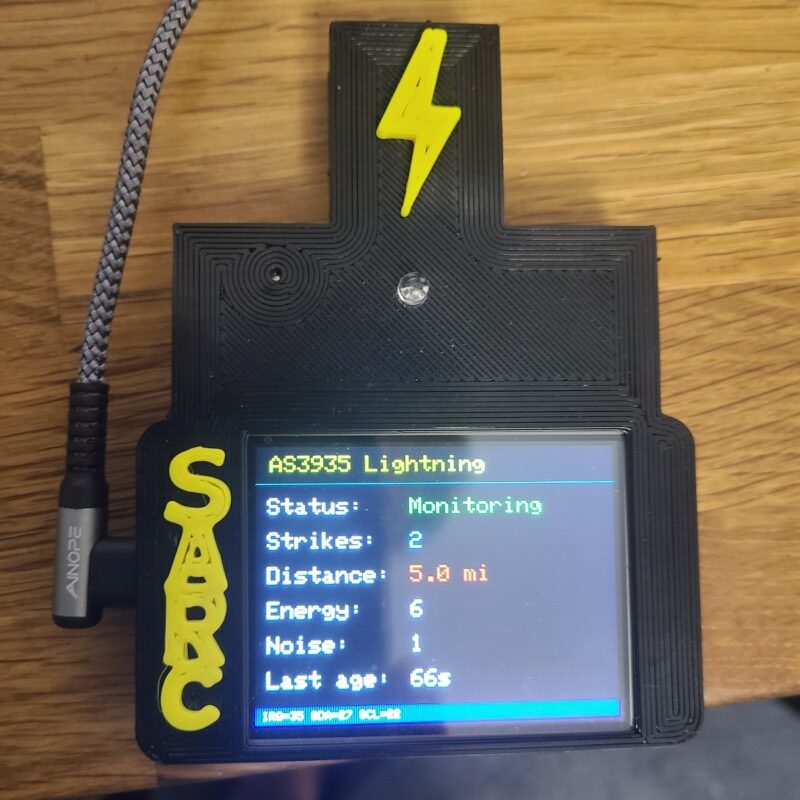
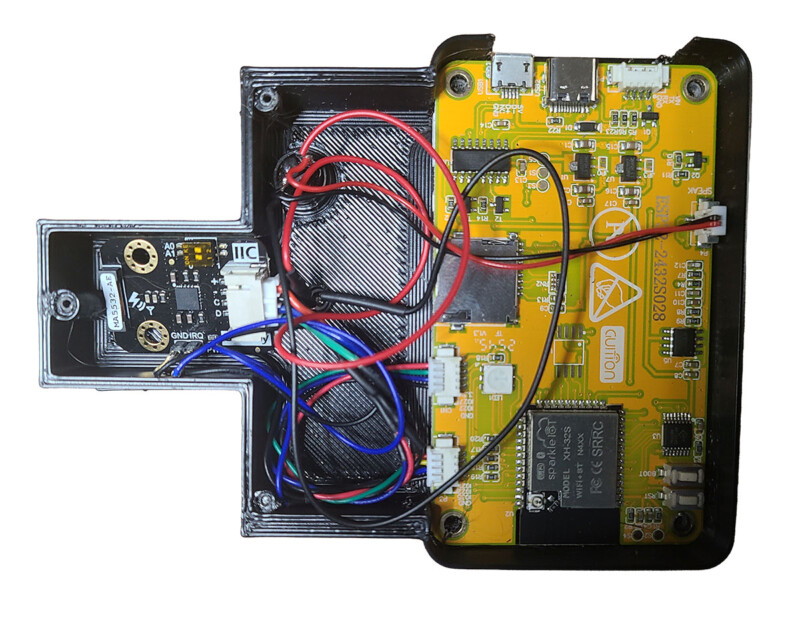
Here is a useful next step for SARC builders. The ESP32 and AS3935 lightning detector can already monitor nearby lightning activity, sound a buzzer, and show information on its local display. The updated project adds a brief Wi-Fi connection, MQTT messaging, Home Assistant, and an optional announcement on selected Amazon Alexa devices.1
This is a good example of what amateur radio encourages: build something, test it, study its limits, and then connect it to a larger system.
Post idea and project material from Kent Ochs, W9KAO.
Topic Snapshot
ESP32 lightning detector project at a glance
Item
Details
Subject
Taking the ESP32 Lightning Detector to the Next Level
Post Written by
Kent Ochs, W9KAO
Core project
ESP32 display board, AS3935 lightning sensor, local display, and buzzer
Network path
ESP32 to MQTT broker to Home Assistant to an optional Alexa announcement
Audience
SARC members, visitors, new hams, the public, operators, and volunteers
Purpose
Add a useful home-automation alert while preserving stand-alone monitoring
The AS3935 is a lightning-sensor integrated circuit. It can recognize lightning activity and report an estimated distance to the leading edge of a storm. Its published range extends from overhead to about 40 kilometers in coarse steps. It does not identify the exact location or distance of an individual bolt.2
That distinction matters. A screen reading such as “5.0 mi” is a useful project estimate, not a surveyed strike location. The displayed energy number is also a relative sensor value, not joules or a calibrated measurement of lightning strength.
Sensor settings and placement matter. The attached sketch selects the outdoor profile. Builders should confirm that the indoor or outdoor profile matches the actual installation and should expect to adjust noise, watchdog, and spike-rejection settings for the local electrical environment.2
How the Updated Sketch Works
MQTT is a lightweight publish-and-subscribe messaging protocol. A device publishes a message to a named topic, and another system subscribes to that topic.3 In this project, the ESP32 is the publisher, an MQTT broker carries the message, and Home Assistant receives it.
---
config:
  markdownAutoWrap: true
  flowchart:
    wrappingWidth: 220
    useMaxWidth: true
    nodeSpacing: 40
    rankSpacing: 50
---
flowchart TD
    A["`AS3935 detects
a valid event`"]

    B["`ESP32 updates the
display and buzzer`"]

    C{"`Is this the first valid strike
in the current session?`"}

    D["`Send a brief Wi-Fi
and MQTT transmission`"]

    E["`Update the local display
and strike count only`"]

    F["`Home Assistant automation
returns an acknowledgement`"]

    G["`The automation may alert
selected Alexa devices`"]

    A --> B
    B --> C

    C -->|"Yes"| D
    C -->|"No"| E

    D --> F
    F --> G
Current project flow from local detection to an optional voice announcement.
Normal monitoring: The display stays on, the AS3935 remains armed, and Wi-Fi stays off. This is a deliberate attempt to reduce radio-frequency noise near the lightning sensor.
Local response: A valid event increases the session count, updates the display, and sounds the buzzer.
First-strike network burst: For the first valid strike in a session, the sketch temporarily disables the sensor interrupt, turns on Wi-Fi, connects to MQTT, and sends one event.
Acknowledgement and retry: Home Assistant must echo the event’s acknowledgement ID to the detector. If that reply is not received, the sketch can make up to three publish attempts in total during the same connection window.
Return to monitoring: The ESP32 turns Wi-Fi off, waits for the hardware to settle, clears pending sensor state, and resumes local monitoring.
Session reset: Later strikes update the local display but do not create another network alert. After 30 minutes without another valid strike, the next strike can start a new session and send a new alert.4
If Wi-Fi, the broker, or Home Assistant is unavailable, the detector resumes its local display and buzzer functions after the network attempt ends. During the Wi-Fi and MQTT window, however, the sensor interrupt is detached. A lightning event during that interval may be missed or cleared. A failed first alert also does not cause later strikes in the same session to reconnect, so this version should not be described as continuous monitoring or a complete network log of every strike.
What the MQTT Event Contains
The supplied sketch sends an event type, an acknowledgement ID, estimated distance in kilometers and miles, a relative energy value, and the current session strike count. It also publishes retained MQTT discovery information so Home Assistant can create the event entity with little manual entity configuration.5
An MQTT Event entity fits this use because an event is momentary rather than continuously on or off. Home Assistant can also make the other JSON fields available as event attributes for an automation.6
Adding Home Assistant and Alexa Announcements
The ESP32 does not communicate directly with Alexa. Home Assistant receives the MQTT event and runs a separate automation. If a compatible Alexa integration is configured, that automation can send a Speak or Announce notification to supported Echo devices.7
A simple announcement might say:
“Lightning detected 18 miles away.”
A closer estimate might use stronger wording:
“Warning. Lightning detected 6 miles away.”
Those distances are examples, not tested safety thresholds. Choose any automation rules carefully. You can target selected Echo devices, add a cooldown, and ignore a repeated event with the same acknowledgement ID. That last step helps prevent duplicate announcements if Home Assistant receives an event but its acknowledgement reaches the ESP32 too late.
Home Assistant and Alexa features can change. Check the current official integration instructions before building the automation.
What You Need
The completed ESP32 and AS3935 detector
A USB data cable and a computer running the Arduino IDE
The current ESP32 board support package, Arduino_GFX display library, DFRobot_AS3935 library, and a compatible MQTT client library
An MQTT broker with a dedicated account for the detector
A compatible Alexa integration if voice announcements are wanted
Time to test the local detector, MQTT event, acknowledgement, and announcement separately
A Practical Setup Path
Make a clean working copy. Keep the original sketch unchanged so you can return to a known starting point.
Sanitize the configuration. Replace network names, passwords, broker addresses, and account information. Never publish a copy containing real credentials.
Install current board and library support. Select the correct ESP32 board and serial port before compiling and uploading.8
Review the MQTT library. The supplied sketch uses PubSubClient. Its maintainer now labels it unmaintained and recommends an actively maintained alternative for new projects. Test compatibility before choosing a long-term client.9
Give each detector a unique identity. If more than one unit is used, assign unique MQTT client IDs, discovery IDs, and topics.
Configure Home Assistant. Confirm that MQTT discovery creates the event entity. Then build the acknowledgement automation before adding the Alexa action. The supplied sketch cannot confirm delivery until a separate Home Assistant automation echoes the received acknowledgement ID.
Test in layers. Verify the local display and buzzer first. Next, watch the MQTT topic. Then confirm the Home Assistant event and acknowledgement. Add the voice announcement last.
Correct the out-of-range display. The current sketch converts the AS3935 0x3F out-of-range value to 63 kilometers, or about 39.1 miles. Correct that case to show “out of range” before relying on the distance display. Confirm that relative energy and session count are labeled clearly.2
Test around local noise sources. Displays, switching power supplies, computers, and transmitters may affect a sensitive lightning detector. Keep notes and change one setting at a time.2
Protect the Network
The development sketch embeds site-specific credentials in the source and compiled firmware. It also uses WiFiClient with unencrypted MQTT on port 1883. Remove all real credentials before sharing the file, and rotate any credentials that have already been exposed. Use a dedicated broker account and access-control rules that limit the topics the detector can publish or subscribe to. Do not expose this unencrypted broker connection directly to the internet. Mosquitto’s current documentation covers authentication and topic access control.10
Current Behavior and Future Ideas
What the supplied sketch does now and what could be explored next
Area
Current Sketch
Possible Next Step
Local monitoring
Display, buzzer, estimated distance, relative energy, and session count
Improve labels, add calibration notes, or add a settings screen
Network alerts
One first-strike MQTT event after a quiet period
Add carefully throttled updates or a separate logging mode
Home Assistant
MQTT discovery, event data, and custom acknowledgement
Add a dashboard, phone notification, or storm-session history
Alexa
Handled by a separate Home Assistant automation
Use selected speakers, distance wording, and duplicate suppression
Reliability
Local operation resumes after a network attempt; monitoring pauses during the Wi-Fi burst
Add health reporting, persistent logging, and clearer fault recovery
Suggested SARC Goals
Simple project goals for different participants
Participant
Suggested Goal
Visitor or member of the public
Follow the path from a physical sensor to a useful home announcement.
New ham or new builder
Upload the sketch and confirm that local detection still works before adding networking.
Home Assistant user
Create the MQTT event, acknowledgement, and one carefully controlled announcement.
Experienced operator
Evaluate radio-frequency interference, placement, grounding, and power-supply noise.
Project volunteer or mentor
Help another builder test one layer at a time and document the results.
Lightning Safety Comes First
This is an educational hobby project. It is not a certified weather-warning or life-safety system, and the sensor manufacturer does not guarantee exact strike locations or complete accuracy. Use official forecasts and alerts, and follow standard lightning-safety guidance.1112
The National Weather Service says there is no safe place outside when thunderstorms are nearby. If you hear thunder, move into a safe building or vehicle. Do not wait for this detector, an Alexa announcement, or any other hobby device to tell you to seek shelter.12
Give It a Try
This project brings together sensing, microcontrollers, software, networking, automation, and careful testing. That makes it a good SARC project for both newer builders and experienced troubleshooters.
Start with the local detector. Add MQTT. Confirm the Home Assistant event and acknowledgement. Add one useful announcement. Most importantly, keep notes about what worked and share what you learned with the club.
If hands-on projects like this sound interesting, come meet the club and learn with local operators and builders.13
“Taking the ESP32 Lightning Detector to the Next Level: Adding Home Assistant and Alexa Announcements” and LightningDetectorHomeAutomation.ino. Project note and Arduino sketch supplied by Kent Ochs, W9KAO. Accessed July 29, 2026. No public URL was supplied. ↩
“When a Safe Building or Vehicle Is Nearby.” National Weather Service, National Oceanic and Atmospheric Administration. Accessed July 29, 2026. Full URL: https://www.weather.gov/safety/lightning-outdoors. Return to citation: a, b.
Zenith, Mount Prospect, and Bill Shillington, W9ZCL
Here is a local radio story worth exploring. Zenith began with two Chicago wireless enthusiasts and an amateur call sign. A few years later, its WJAZ broadcast station placed two landmark towers in Mount Prospect. Decades after that, Mount Prospect amateur operator Bill Shillington, W9ZCL, showed how radio knowledge could support communities during disasters.
This is a focused chapter of Chicago-area amateur radio history, not a complete history of every local club or station. Thank you to John Thornton, KD9VZJ, for suggesting the topic.
Topic Snapshot
Zenith Radio and Mount Prospect history at a glance
Main subject
Zenith’s amateur-radio beginnings, WJAZ in Mount Prospect, and the later public-service work of Bill Shillington, W9ZCL
Location focus
Chicago and the former WJAZ transmitter site at Rand and Central Roads in Mount Prospect, Illinois
Zenith traces its start to 1918, when Karl Hassel and Ralph H.G. Mathews began making radio equipment for other amateurs on a kitchen table in Chicago. Their business became the Chicago Radio Laboratory. The trade name “Z-Nith,” and later Zenith, came from the call sign of their amateur station, 9ZN.[1]
A call sign is the identifying combination of letters and numbers assigned to a radio station. Today, SARC uses N9RJV. In Zenith’s case, one early amateur call sign became part of a nationally recognized company name.
It is important to separate amateur radio from broadcasting. Amateur radio is built around licensed personal communication, experimentation, and service. WJAZ was a broadcast station that sent programs to a general audience. Zenith’s direct amateur-radio connection was the earlier work of Hassel and Mathews and their station 9ZN.
How WJAZ Reached Mount Prospect
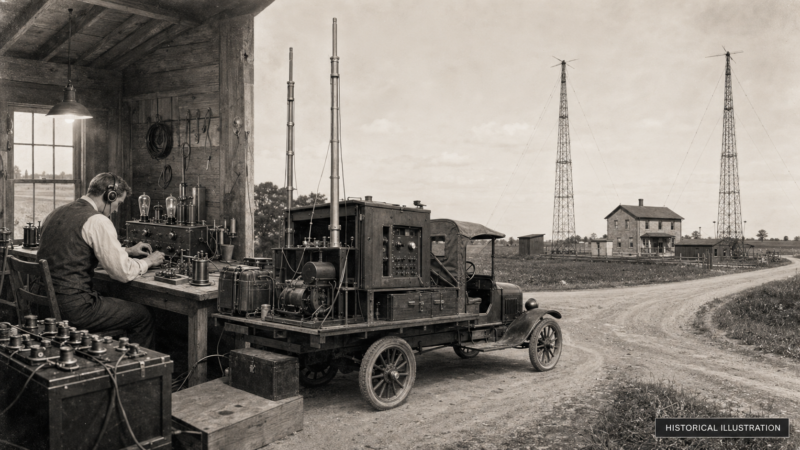
WJAZ began broadcasting from Chicago’s Edgewater Beach Hotel in 1923. Zenith later used a self-contained portable station mounted on a truck to test possible transmitter locations around Chicago. Mount Prospect offered open farmland and room for a high-power installation.[2]
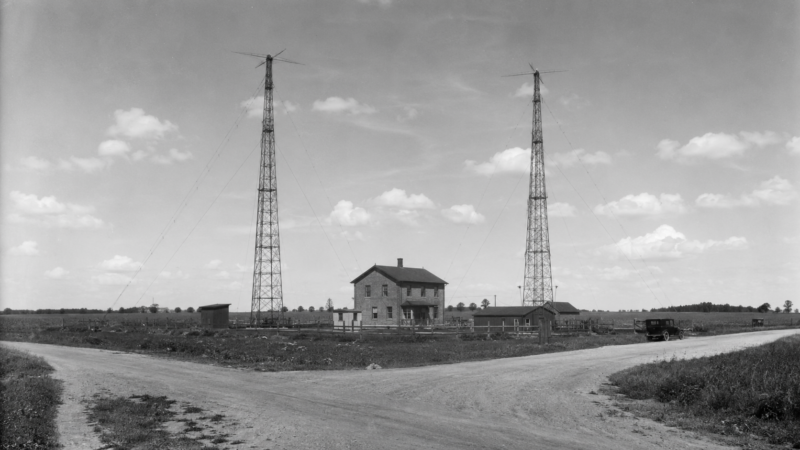
In 1925, Zenith built the WJAZ facility at Rand and Central Roads. The Mount Prospect Historical Society describes a two-story farmhouse between two towers, with a 5,000-watt, water-cooled transmitter inside. One tower displayed the word “Zenith” in red lights. The towers remained a familiar local landmark until the property was redeveloped in the 1970s.[2]
Why the WJAZ Court Case Mattered
In 1926, Zenith challenged the federal government’s authority to control WJAZ’s operating frequency under the Radio Act of 1912. The federal court found for the defendants because the older law did not give the Secretary of Commerce the claimed authority to restrict a station to an assigned wavelength.[3]
The WJAZ decision was an important part of a larger national problem involving crowded frequencies and weak regulation. It did not single-handedly create a new law. However, it exposed a major limit in the 1912 framework. Congress passed the Radio Act of 1927, which created the Federal Radio Commission to oversee broadcasting.[4]
For local radio enthusiasts, that makes the Mount Prospect site more than a lost landmark. It was connected to an important period in the development of American radio regulation.
Bill Shillington, W9ZCL: A Later Mount Prospect Service Story
A public call-sign record identifies William Shillington, W9ZCL, with Mount Prospect. Call-sign and license information can change, so readers should use the Federal Communications Commission (FCC) Universal Licensing System for current status.[5]
The Salvation Army reports that Shillington first volunteered with SATERN during the 1990 Plainfield tornado response. SATERN is the Salvation Army Team Emergency Radio Network. In 1995, he took a Salvation Army canteen, a mobile disaster-response vehicle, to earthquake-stricken Kobe, Japan. By 2016, he was overseeing SATERN operations in the Central Territory.[6]
ARRL, the national association for amateur radio, reported that Shillington, W9ZCL, was dispatched to assist after the 2011 Joplin tornado while serving as SATERN Central Territorial Coordinator. The supplied June 2011 Standing Wave newsletter reprinted the same account.[7][8]
No reviewed source establishes a personal or organizational connection between Shillington and Zenith or WJAZ. His story belongs here as a separate, later example of Mount Prospect’s place in radio history and the public-service tradition of amateur radio.
A Necessary Name Check: Shellington and Shillington
The supplied Facebook post is about William H. “Bill” Shellington Jr. Independent aviation sources describe him as a Pennsylvania pilot, a World War II naval aviator, an early aerial traffic reporter for travelers heading to the Jersey Shore, and later a corporate pilot for Campbell Soup Company.[9][10]
That Bill Shellington is not Bill Shillington, W9ZCL. The reviewed sources do not connect Shellington with Zenith, WJAZ, Mount Prospect, or amateur radio. Keeping the names separate protects the accuracy of both histories.
Two Radio-History Paths
---
config:
  markdownAutoWrap: true
  flowchart:
    wrappingWidth: 220
    useMaxWidth: true
    nodeSpacing: 40
    rankSpacing: 50
---
flowchart TD
    A["`Amateur station
9ZN`"]

    B["`Chicago Radio
Laboratory`"]

    C["`Zenith Radio
Corporation`"]

    D["`WJAZ broadcast
station`"]

    E["`Mount Prospect
transmitter site`"]

    F["`Bill Shillington
W9ZCL`"]

    G["`SATERN
public service`"]

    A --> B
    B --> C
    C --> D
    D --> E

    F --> G
Diagram note: These are two separate paths within the regional radio story. The sources do not show a direct link between Bill Shillington and Zenith.
Chicago and Mount Prospect Radio Timeline
Selected milestones for this local history
Year
Milestone
Why It Matters
1918
Zenith traces its beginning to Hassel and Mathews making equipment for radio amateurs in Chicago.[1]
Amateur experimentation helped launch a major electronics company.
1923
Zenith Radio Corporation was incorporated, and WJAZ was broadcasting from the Edgewater Beach Hotel.[1][2]
The story moved from amateur equipment into commercial broadcasting.
1925
The WJAZ transmitter facility and towers were built in Mount Prospect.[2]
Mount Prospect became a visible part of Chicago-area radio history.
1926
A federal court ruled for Zenith in the WJAZ frequency case.[3]
The decision exposed limits in the Radio Act of 1912.
1927
The Radio Act of 1927 created the Federal Radio Commission.[4]
Federal oversight of broadcasting entered a new era.
1990–2011
Bill Shillington, W9ZCL, served through SATERN responses that included Plainfield and Joplin.[6][7]
Mount Prospect’s amateur-radio story continued through emergency service.
How to Explore This History
Start with the official Zenith heritage page and look for the story of amateur station 9ZN.
Read the Mount Prospect Historical Society account and study its photographs of the WJAZ towers.
Open the FCC record of the 1926 court decision to see how radio technology and law intersected.
Read the ARRL and Salvation Army accounts of Bill Shillington’s public-service work.
If you share the story, use Shillington for W9ZCL and Shellington for the Pennsylvania aviator.
If you visit the Rand and Central Roads area, remember that the towers and station building are gone. View the area only from public places. Check the Mount Prospect Historical Society’s official website for current museum hours, programs, and research options.
Suggested SARC Goals
Ways SARC readers can use this local history
Member Type
Suggested Goal
Visitor or prospective ham
Learn what a call sign is and why 9ZN mattered to the Zenith name.
New ham
Compare amateur radio with one-way commercial broadcasting.
Active operator
Explore SATERN and other emergency-communications training opportunities.
Club historian
Collect properly sourced local radio memories, photographs, and call-sign records.
SARC mentor
Use the 9ZN, WJAZ, and W9ZCL stories to show newcomers the hobby’s technical and service traditions.
Give It a Try
Chicago-area radio history is close to home. It begins here with experimenters at a kitchen table, continues through a remarkable Mount Prospect broadcast site, and reaches into amateur radio’s tradition of disaster service.
Learn more about Zenith Radio, then read the Mount Prospect and amateur-radio sources below. If you have a documented memory, photograph, QSL contact card, or correction related to this history, consider sharing it with SARC or the Mount Prospect Historical Society.
More History From 9ZN to WJAZ
Zenith Radio’s Amateur Roots in Chicago and Mount Prospect
Here is a local radio-history trail worth following. It begins with amateur station 9ZN on Chicago’s North Side, grows into Zenith Radio and WJAZ, reaches Mount Prospect, and continues in the public-service spirit shown by Bill Shillington, W9ZCL. This post idea was shared by John Thornton, KD9VZJ.
For SARC members, this story is a useful reminder that amateur radio has long connected experimentation, business, broadcasting, and service to others.
History From 9ZN to WJAZ Snapshot
Key people, stations, places, and dates in this Chicago-area radio story
Topic
Snapshot
Amateur radio root
Ralph H. G. Mathews operated amateur station 9ZN in Chicago.
Early company
Mathews and Karl Hassel formed the Chicago Radio Laboratory in 1919.
Zenith name
The early “Z-Nith” trade name was drawn from the 9ZN call sign.
Broadcast station
WJAZ began broadcasting from Chicago and later used a transmitter site in Mount Prospect.
Mount Prospect site
Central Road and Rand Road; the original station and towers no longer stand.
Public-service example
Bill Shillington, W9ZCL, served as a SATERN Central Territorial Coordinator and deployed after the 2011 Joplin tornado.
A Ham Station Helped Name Zenith
Ralph H. G. Mathews and Karl Hassel were radio amateurs before they became radio manufacturers. They formed the Chicago Radio Laboratory in 1919 and worked from modest quarters on Chicago’s North Side.
Mathews used the amateur call sign 9ZN. The early company turned those letters into the trade name “Z-Nith,” which became Zenith. An ARRL historical account also identifies Mathews as an active message handler and a leader of the first ARRL National Convention in Chicago in 1921.[1]
This is the part of the story that should interest every new ham. A personal amateur station was not merely a hobby room. It became a place for testing equipment, handling messages, meeting other operators, and developing ideas that reached far beyond the shack.[2]
From the Chicago Radio Laboratory to WJAZ
The Chicago Radio Laboratory first built equipment for radio amateurs. As public broadcasting developed, the company moved into receivers and station operation.
WJAZ began broadcasting from the Edgewater Beach Hotel in Chicago in 1923. Zenith later sold that original station facility but retained the WJAZ call letters. The company then placed a portable broadcast station on a truck and used it to test possible transmitter locations around Chicago.[3]
The truck was a practical field station. It carried a transmitter, power system, and portable antenna supports. That combination let the crew set up, transmit, evaluate reception, and move to another location. Modern portable operators will recognize the basic idea immediately.
Why Mount Prospect Mattered
After testing locations around the region, Zenith selected Mount Prospect for the permanent WJAZ transmitter. The station was built near Central and Rand Roads in 1925. At the time, the surrounding farmland offered distance from the heavier radio interference found in Chicago.[4]
The site included a station building between two tall towers. The towers became familiar local landmarks and remained part of the Mount Prospect landscape for decades. The buildings and towers were later removed, and Mount Prospect Plaza now occupies the site. Readers planning a local history visit should check the Mount Prospect Historical Society for current exhibits, programs, and access information.
WJAZ and the Rules of Broadcasting
WJAZ also became part of an important dispute over who had authority to assign broadcast frequencies. In 1926, Zenith challenged the Department of Commerce’s power under the Radio Act of 1912. The court found that the existing law did not give the department the needed authority to control station frequencies.
The dispute was one part of a larger period of broadcast interference and regulatory uncertainty. Congress passed the Radio Act of 1927, creating the Federal Radio Commission to oversee broadcasting.[5]
For today’s operators, the lesson is simple. Radio is both technical and shared. Good operating depends on frequency coordination, clear rules, and respect for other stations.
From Experimentation to Public Service
Bill Shillington, W9ZCL, belongs to a later and separate chapter of amateur radio history. His work is not part of Zenith’s corporate story. However, it shows how the experimental and message-handling traditions of early hams developed into organized emergency communication.
Shillington served as the Central Territorial Coordinator for SATERN, the Salvation Army Team Emergency Radio Network. After the May 2011 Joplin tornado damaged normal communication systems, he and Ken Panczyk, W9KMP, were dispatched to assist the response. Amateur operators helped connect hospitals, shelters, and relief organizations when telephone and cellular service was unreliable or overloaded.[6][7]
The equipment changed between 9ZN and W9ZCL. The useful habits did not: learn the technology, practice before it is needed, pass information accurately, and work as part of a team.
How the Story Connects
---
config:
  markdownAutoWrap: true
  flowchart:
    wrappingWidth: 220
    useMaxWidth: true
    nodeSpacing: 40
    rankSpacing: 50
---
flowchart TD
    A["`Amateur station
9ZN`"]

    B["`Chicago Radio
Laboratory`"]

    C["`Zenith Radio
Corporation`"]

    D["`WJAZ broadcast
station`"]

    E["`Mount Prospect
transmitter site`"]

    F["`Bill Shillington
W9ZCL`"]

    G["`SATERN
public service`"]

    A --> B
    B --> C
    C --> D
    D --> E

    F --> G
Two chapters of Chicago-area amateur radio history: early experimentation and later public service.
How to Learn More
Read the Mount Prospect Historical Society’s history of the WJAZ station and towers.
Review the ARRL account of 9ZN and Chicago’s early amateur-radio community.
Look at the 2011 Joplin response report to see how trained amateurs supported real communication needs.
Bring one question or historical item to a SARC gathering and compare early operating practices with the equipment we use today.
Check each official source before planning a visit or relying on current program information.
Suggested History From 9ZN to WJAZ Goals
Ways SARC members can use this history as a learning activity
Member type
Suggested goal
New ham
Learn what a call sign identifies and why accurate station identification matters.
Portable operator
Compare the WJAZ truck station with a modern portable HF or VHF/UHF station.
Builder or experimenter
Research one early Zenith receiver or transmitter and identify the problem it was designed to solve.
Public-service volunteer
Practice concise message handling and learn how a directed net works.
Club historian
Collect reliable local radio stories, photographs, QSL cards, and source information before they are lost.
Give It a Try
Start with the story of 9ZN, then follow the trail to WJAZ and Mount Prospect. It is a local example of what can happen when curious operators keep learning and building.
Then look at Bill Shillington’s public-service work and ask a practical question: what skill can we practice now that may help someone later?
Learn more about Zenith Radio, explore the WJAZ history, and share what you discover with SARC.
Five Dollar Fives: WJAZ/Ham Radio with Frank Corry. Mount Prospect Historical Society, December 22, 2022; program held September 30, 2023. Accessed July 23, 2026. https://www.mtphist.org/five-dollar-fives/. ↩
“W9ZCL Callsign Record: William Shillington.” QRZCQ, passive data from the public FCC database. Accessed July 23, 2026. https://www.qrzcq.com/call/W9ZCL